
POISON IVY Leaves of three – let them be
Poison Ivy Safety Tips for Summer: How to Identify, Prevent, and Treat Exposure
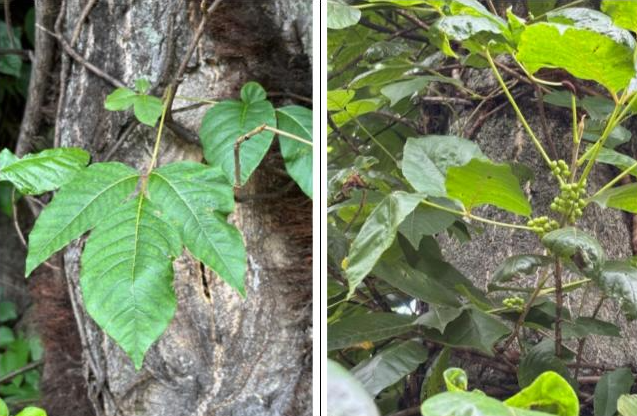
With summer in full swing and more time spent outdoors hiking, gardening, playing sports, or enjoying picnics, it is important to stay alert to common outdoor hazards—especially poison ivy. This widespread plant is easily recognizable by its fuzzy vines, clusters of berries, and most notably, its leaves that grow in groups of three.
What Makes Poison Ivy Dangerous?
All parts of the poison ivy plant produce urushiol oil, a highly irritating substance that causes an itchy, blistering rash. This oil can transfer to your skin on contact and must be washed off within 30 minutes using any soap. During that brief window, it can also spread to other areas of your body. Once absorbed, it cannot be removed and will begin to trigger an allergic reaction.
How Poison Ivy Spreads
Urushiol oil can linger on clothing, tools, and other surfaces for extended periods if not thoroughly cleaned. Pets can also carry the oil on their fur and unknowingly bring it indoors. One of the most dangerous mistakes is burning poison ivy, as this releases the toxic oil into the air. Inhaling or coming into contact with the smoke can cause severe respiratory and skin reactions. Never burn poison ivy.
Symptoms and Rash Progression
A poison ivy rash typically develops within 4 to 48 hours after exposure. It often appears first on areas where the oil concentration was highest, with new patches potentially emerging for up to six weeks. The rash is not contagious, and the fluid in the blisters does not spread the irritation. It behaves similarly to a friction blister from ill-fitting shoes.
How to Treat Poison Ivy at Home
To relieve symptoms, avoid breaking the blisters. Instead, apply a saline compress made from a teaspoon of salt dissolved in a pint of lukewarm water. Soak a clean cloth in the solution, wring it out, and apply it to the rash for 15 minutes. This can be repeated several times a day to help dry the blisters and reduce discomfort.
When to Seek Medical Treatment
If your poison ivy rash is widespread, intensely itchy, or not improving, medical treatment may be necessary. Dr. Robin Gail Oshman, MD, PhD, offers expert care for poison ivy reactions in her Westport and New Canaan offices. Treatments may include prescription topical or systemic corticosteroids such as prednisone to relieve inflammation and itching.
Do not wait for symptoms to worsen. Schedule an appointment today by calling 203-454-0743.